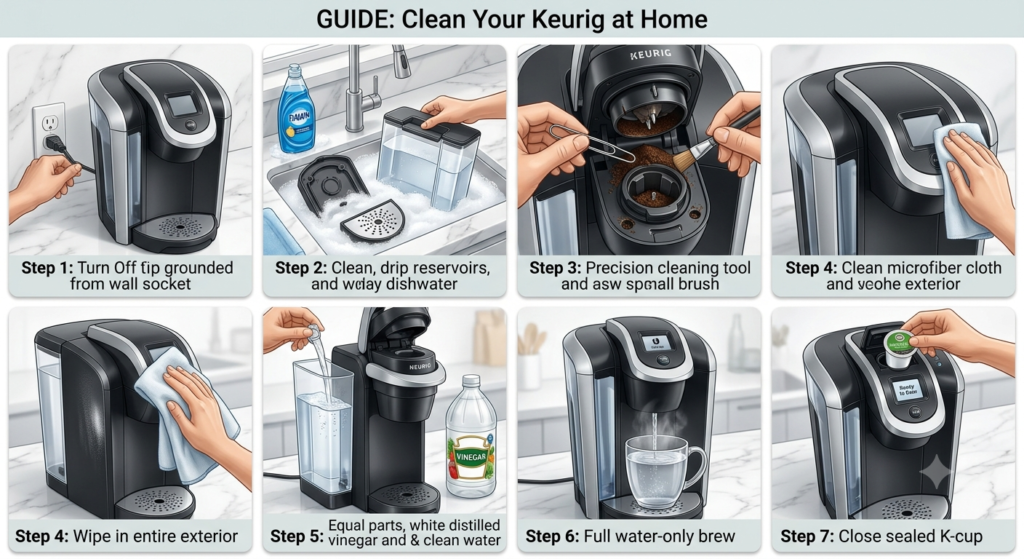
If your coffee doesn’t taste as rich as it used to, your Keurig coffee maker probably needs a deep clean. Over time, coffee oils, mineral deposits, and bacteria build up inside the machine. This affects not only the taste of your coffee but also the performance and lifespan of your brewer.
The good news is that you don’t need expensive cleaning products. Using simple household items like white vinegar and water, you can restore your Keurig in less than 30 minutes.
In this guide, you’ll learn exactly how to clean a Keurig coffee maker at home, remove limescale, unclog the needles, and keep your coffee tasting fresh every day.
Why You Should Clean Your Keurig Regularly
Cleaning your Keurig isn’t just about appearance. Internal buildup can reduce water flow, change the flavor of your coffee, and even damage the machine over time.
Benefits of regular cleaning include:
- Better-tasting coffee
- Faster brewing
- Longer machine lifespan
- Fewer clogs
- Improved hygiene
- Reduced mineral buildup
Things You’ll Need
Before you begin, gather these items:
- White distilled vinegar
- Fresh water
- Mild dish soap
- Microfiber cloth
- Soft brush or toothbrush
- Paper clip (optional)
Step 1: Turn Off and Unplug Your Keurig
Always unplug the machine before cleaning. Let it cool completely to avoid burns.
Step 2: Clean the Removable Parts
Remove:
- Water reservoir
- Lid
- Drip tray
- K-Cup holder
Wash them with warm water and mild dish soap. Rinse thoroughly and allow them to air dry.
Step 3: Clean the K-Cup Holder and Needles
Coffee grounds often get trapped around the needles.
Rinse the K-Cup holder under warm water and gently clean it with a soft brush.
If necessary, carefully use a paper clip to remove debris from the needle openings.
Step 4: Wipe the Outside
Use a damp microfiber cloth to wipe the entire coffee maker, including:
- Handle
- Buttons
- Brewing head
- Drip area
This removes coffee stains and dust.
Step 5: Descale with Vinegar
Mineral deposits caused by hard water can clog your machine.
To descale:
- Empty the reservoir.
- Fill it halfway with white vinegar.
- Fill the remaining half with clean water.
- Brew without inserting a coffee pod.
- Repeat until the reservoir is empty.
- Let the machine sit for 30 minutes.
The vinegar dissolves calcium and lime deposits inside the machine.
Step 6: Flush with Fresh Water
Rinse the reservoir and fill it with clean water.
Run 6–8 brew cycles until all traces of vinegar are gone.
This ensures your next cup of coffee tastes fresh.
Step 7: Reassemble and Brew
Reinstall all parts and brew one cup of plain water before making coffee.
Your Keurig is now clean and ready to use.
How Often Should You Clean a Keurig?
| Cleaning Task | Frequency |
|---|
| Wipe Exterior | Weekly |
| Wash Reservoir | Weekly |
| Clean K-Cup Holder | Weekly |
| Descale Machine | Every 3 Months |
If you have hard water, descale every 2 months.
Signs Your Keurig Needs Cleaning
Your coffee maker needs cleaning if you notice:
- Slow brewing
- Bitter coffee
- Smaller cup sizes
- Strange smells
- Loud brewing noises
- White mineral deposits
Ignoring these signs can shorten the life of your machine.
Expert Maintenance Tips
To keep your Keurig working like new:
- Use filtered water whenever possible.
- Empty standing water daily.
- Replace the water filter regularly.
- Wipe spills immediately.
- Descale every few months.
- Clean removable parts every week.
These simple habits help prevent expensive repairs.
Frequently Asked Questions
Can I clean my Keurig with vinegar?
Yes. White distilled vinegar is one of the most effective and affordable descaling solutions.
How long does it take to clean a Keurig?
A complete cleaning usually takes around 30–40 minutes, including descaling and rinsing.
Can I use apple cider vinegar?
No. White distilled vinegar is recommended because it leaves less residue and odor.
Why is my Keurig brewing slowly?
The most common cause is mineral buildup or clogged needles. Descaling usually fixes the problem.
How often should I descale my Keurig?
Every three months, or every two months if you use hard water.
Final Thoughts
Learning how to clean a Keurig coffee maker at home is one of the best ways to improve coffee quality and protect your investment. Regular maintenance removes mineral buildup, improves brewing performance, and extends the life of your machine.
Follow the steps in this guide every few months, and you’ll enjoy cleaner, better-tasting coffee with every cup.