Physical Address
304 North Cardinal St.
Dorchester Center, MA 02124
Physical Address
304 North Cardinal St.
Dorchester Center, MA 02124

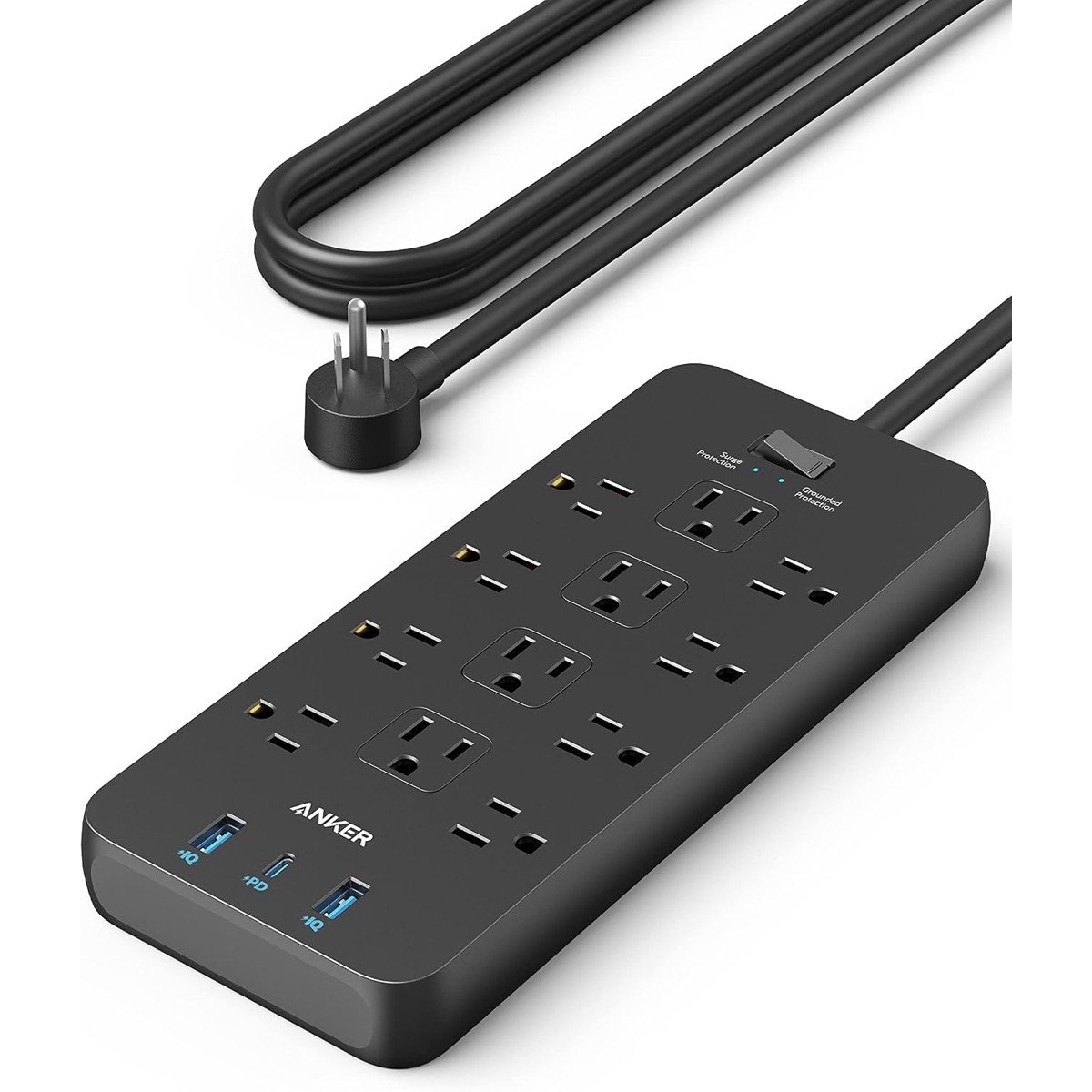
A good power strip with USB does three things: it protects what is plugged into it, it charges a phone without stealing an outlet for a brick, and its cord actually reaches. The Anker A9192 is the best all round pick here, with 12 outlets, 2,100 joules of surge protection, and a 20W USB-C port. The GE UltraPro carries the highest surge rating on the list at 4,320 joules. The One Beat is the travel pick, and it is honest about the one thing it does not do: it has no surge protection at all, on purpose, because cruise ships ban surge protectors.
As an Amazon Associate, Wunely earns from qualifying purchases. If you buy through a link on this page, we may earn a small commission at no extra cost to you.
Updated November 2026.
Charging gear works best as a system. A strip like these handles the desk or the TV stand, and our guide to the best portable power bank for travel covers the power you carry with you.
| Pick | AC outlets | USB ports | Surge rating | Cord |
|---|---|---|---|---|
| Anker Power Strip A9192 | 12 | 2 USB-A, 1 USB-C (20W PD) | 2,100 J | 5 ft, flat plug |
| GE UltraPro 11824 | 12 | 2 USB-A on a tethered dock | 4,320 J | 8 ft, flat plug |
| Belkin BV112050-06 | 12 | 2 USB-A (2.1A shared) | 3,996 J | 6 ft, flat plug |
| TESSAN TS-108-C | 8 | 2 USB-A, 1 USB-C (15W total) | 1,080 J | 10 ft flat cord, flat plug |
| Belkin SRA008p6tt | 6 | 1 USB-A, 1 USB-C PD (22.5W total) | 1,680 J | None, plugs into the wall |
| One Beat OB3WC2 | 3 | 2 USB-A, 2 USB-C (15.5W total) | None | 5 ft braided, flat plug |
Every strip here had to have built in USB charging, a stated joule rating or an honest lack of one, and a safety listing or a named certification from its manual. We checked the exact model and its Amazon ASIN against two independent sources, such as the manufacturer manual, camelcamelcamel, or a second retailer, so the button under each pick goes to exactly the strip described. We also read the fine print most listings skip: shared USB wattage, what the Protected light means, and when a strip needs replacing. One honest note up front: a joule rating is a budget of surge energy a strip can absorb over its life, not a force field. No strip can save a TV from a direct lightning strike, and any strip whose Protected light has gone out should be replaced, because it is no longer protecting anything.
The Anker A9192 is the strip to buy when one strip has to run a whole desk. It has 12 AC outlets with spacing that fits larger bricks, two USB-A ports, and one USB-C port with 20W Power Delivery, enough to fast charge a phone. The shared USB ceiling is 15W when several ports are busy at once, so treat the USB-C figure as a one device at a time number. Surge protection is rated at 2,100 joules, with indicator lights for surge and ground status. The 5 ft cord ends in a flat plug, the back has keyhole slots for wall mounting, and the unit is TUV listed. Anker covers it with an 18 month warranty and a lifetime $200,000 connected equipment warranty.
Pros:
Cons:
Who should skip it: anyone protecting a home theater first and a desk second. The GE below carries double the surge rating and a longer cord.
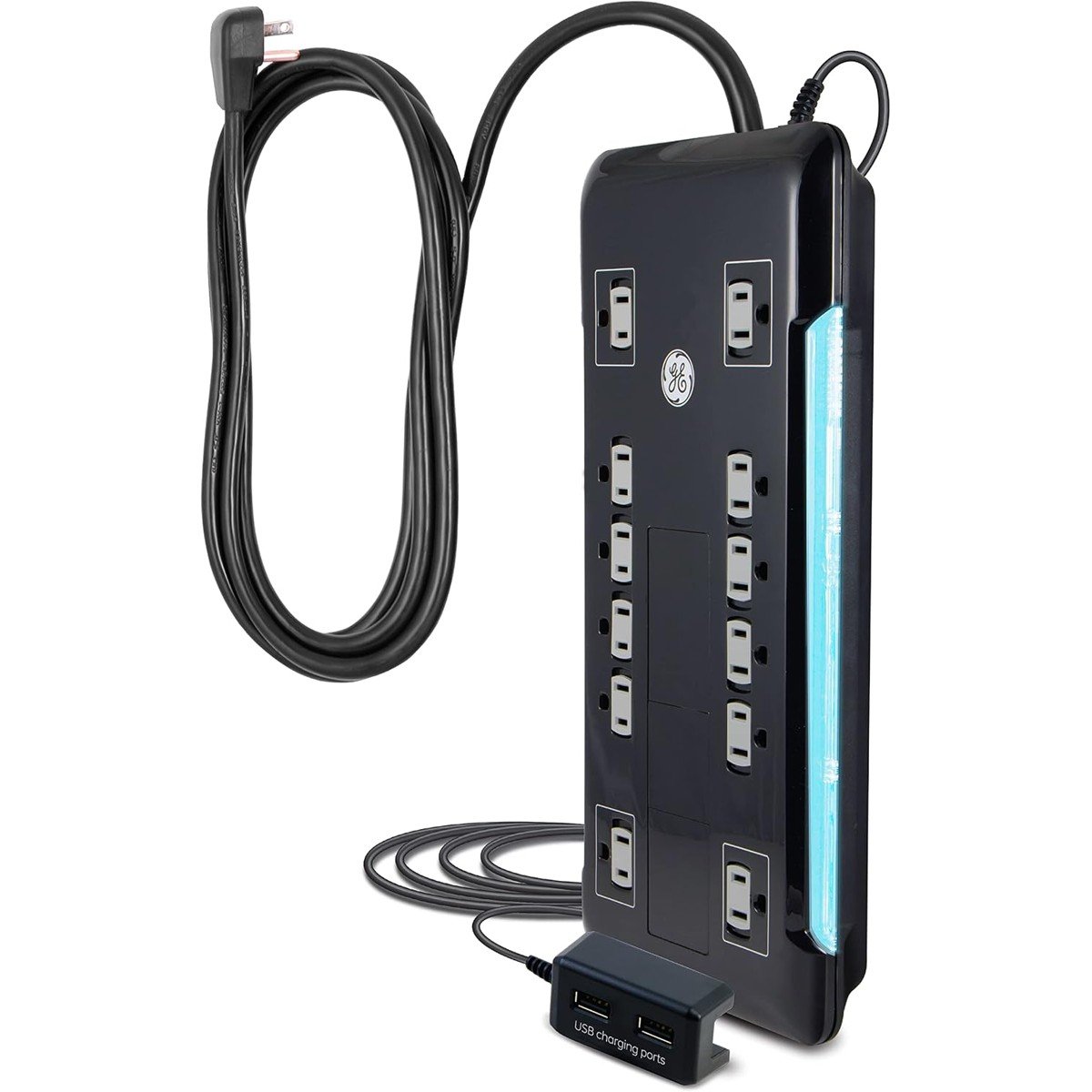
The GE UltraPro 11824 is built around one number: 4,320 joules, the highest surge rating in this roundup. It has 12 outlets, four of them spaced for adapter bricks, and an 8 ft cord with a flat plug, so it reaches behind a TV stand without an extension. The unusual feature is the USB dock. Two USB-A ports sit on a small tethered dock with its own 4.5 ft cord, so your phone can charge on the desk while the strip hides below it. The unit is UL listed, has a light bar that shows protection status, and GE backs it with a $500,000 connected equipment warranty according to the product manual.
Pros:
Cons:
Who should skip it: anyone who wants USB-C fast charging at the strip. The Anker above or the small Belkin wall tap below will serve you better.
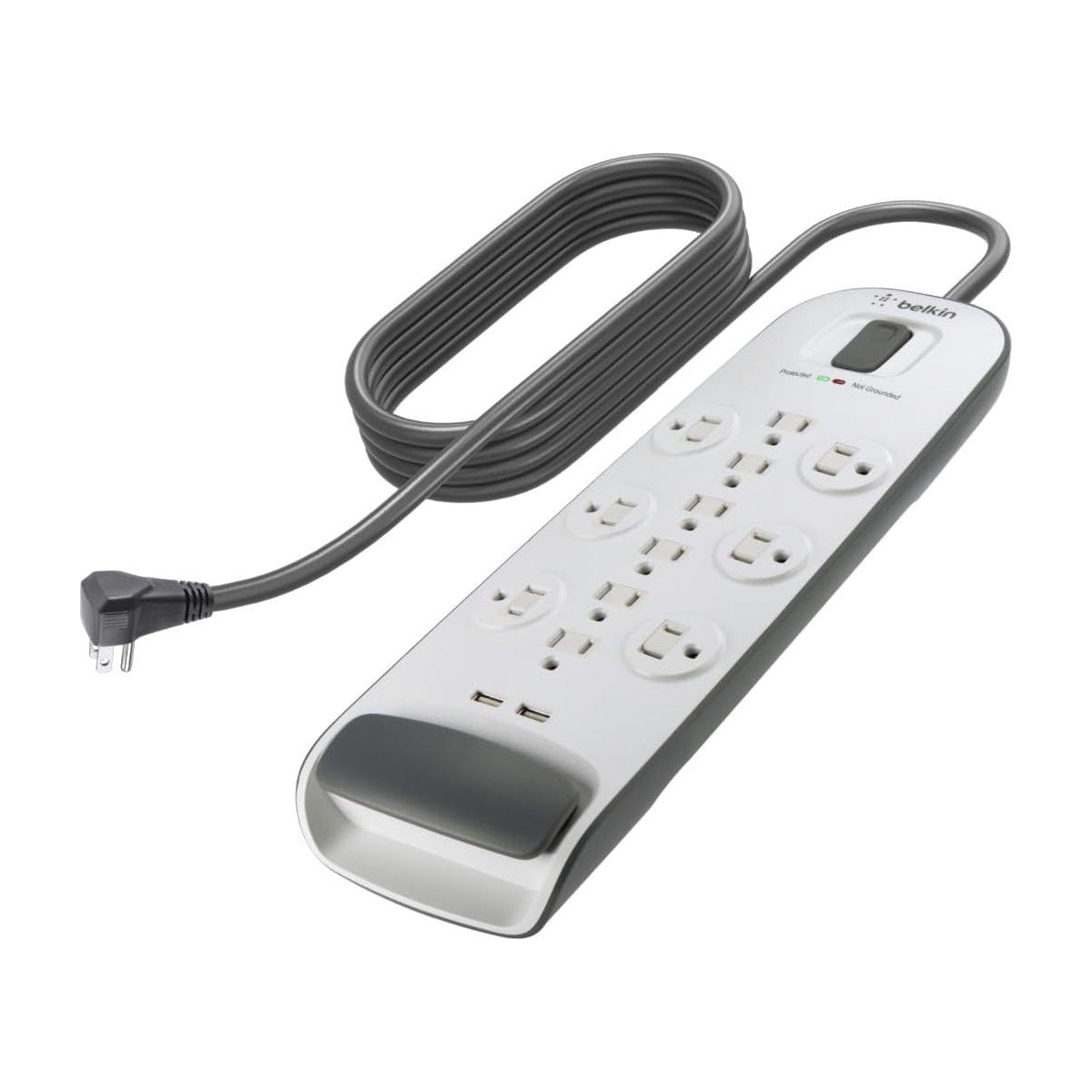
The Belkin BV112050-06 is the long running classic of this category. It offers 12 outlets, six of them BlockSpace outlets turned sideways so big bricks stop eating two sockets each. Surge protection is 3,996 joules, second only to the GE here. Two USB-A ports share 2.1A, which is fine for overnight phone and earbud charging and nothing more. The 6 ft cord ends in a flat plug. Protected and Not Grounded indicator lights sit on top, and mounting holes let it screw to a wall or bench. Belkin covers it with a 2 year warranty and a connected equipment warranty of up to $250,000.
Pros:
Cons:
Who should skip it: anyone whose phone fast charges over USB-C and expects the strip to keep up. This Belkin protects gear well and charges slowly.
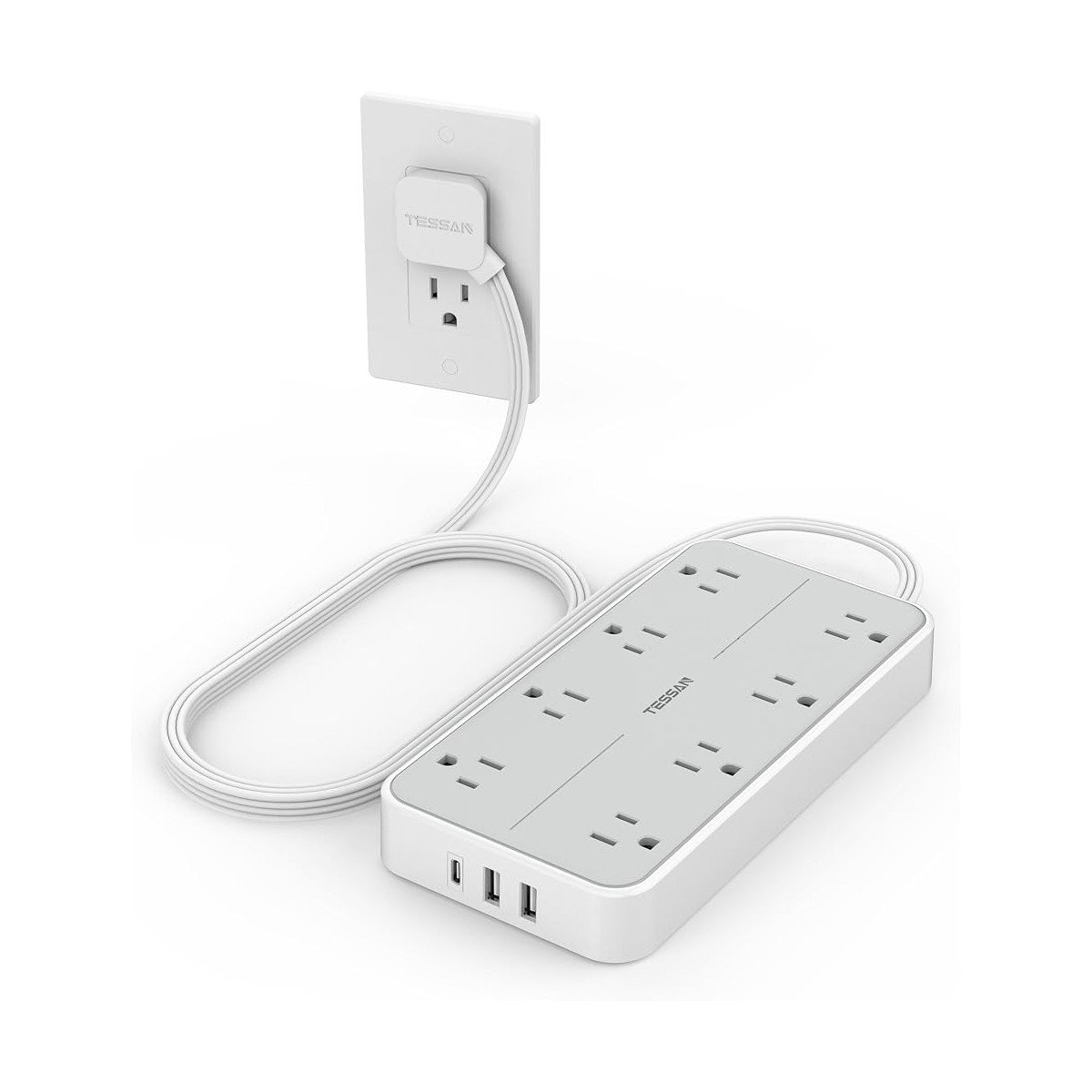
The TESSAN TS-108-C is the flat plug pick, built for the outlet hiding behind a sofa or a bed. The cord itself is flat and 10 ft long, so it runs along a baseboard or under a rug edge without a lump, and the plug is an ultra flat design that lets furniture sit close to the wall. You get 8 widely spaced outlets across three sides, two USB-A ports, and one USB-C port, with 15W of USB power in total. Surge protection is 1,080 joules. That is real protection for lamps, chargers, and a laptop, but it is the lowest rating among the corded surge strips here, so keep the TV and the desktop PC on a higher rated strip. It can wall mount with two keyholes on the back.
Pros:
Cons:
Who should skip it: anyone buying protection for expensive electronics. Buy it for reach and layout, and put the costly gear on the Anker or the GE.
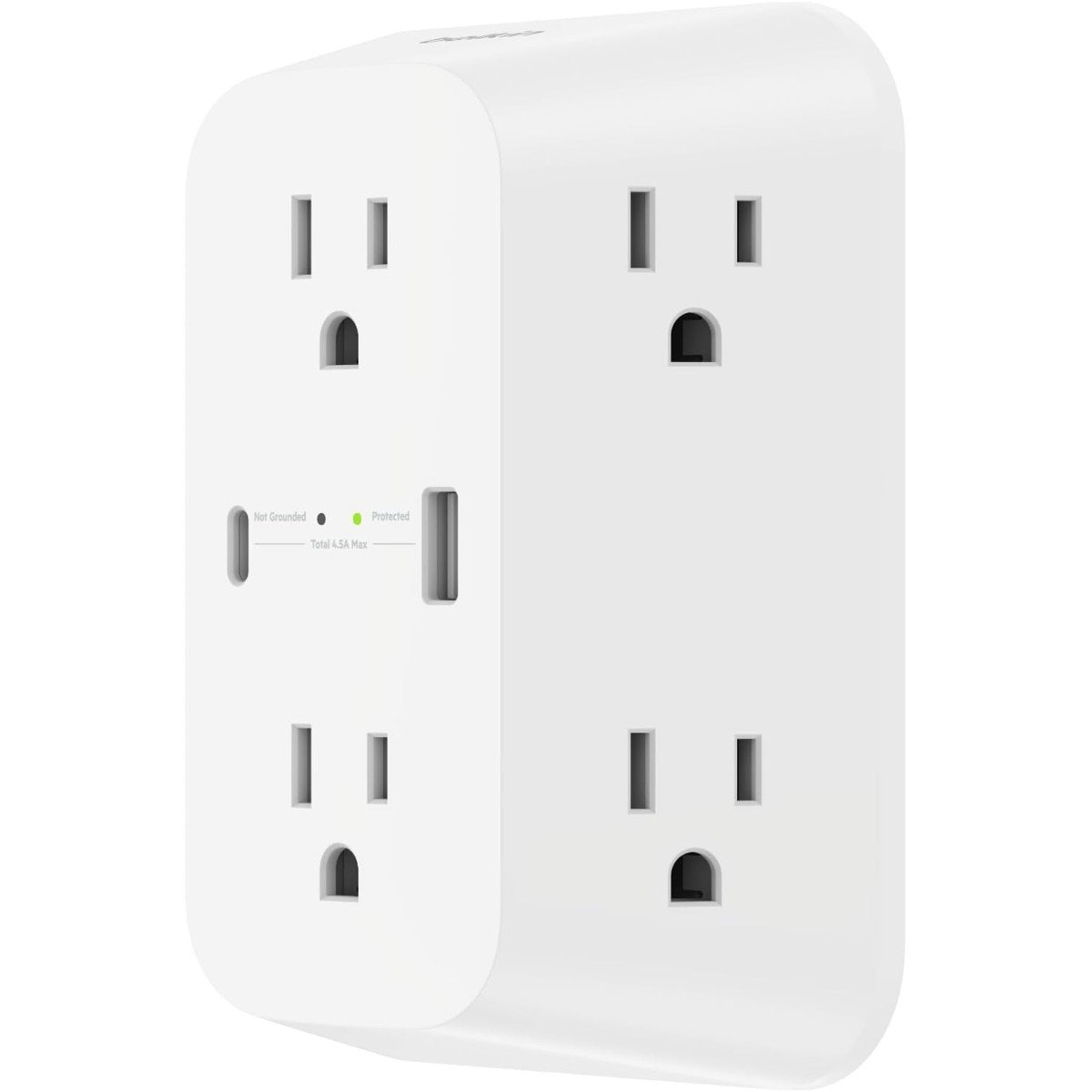
The Belkin SRA008p6tt takes a different shape. There is no cord at all. It plugs straight into a wall outlet and turns it into 6 AC outlets plus two USB ports, one USB-C with Power Delivery and one USB-A, sharing 22.5W. Surge protection is 1,680 joules, respectable for a wall tap, and it is ETL listed. Protected and Not Grounded lights sit on the front. This is the right format for a bathroom counter, a kitchen, or the wall behind a nightstand, where a corded strip would just gather dust and cables. Belkin includes a 2 year warranty and a $25,000 connected equipment warranty.
Pros:
Cons:
Who should skip it: anyone who needs outlets more than a foot from the wall. Every other pick here has a cord for a reason.
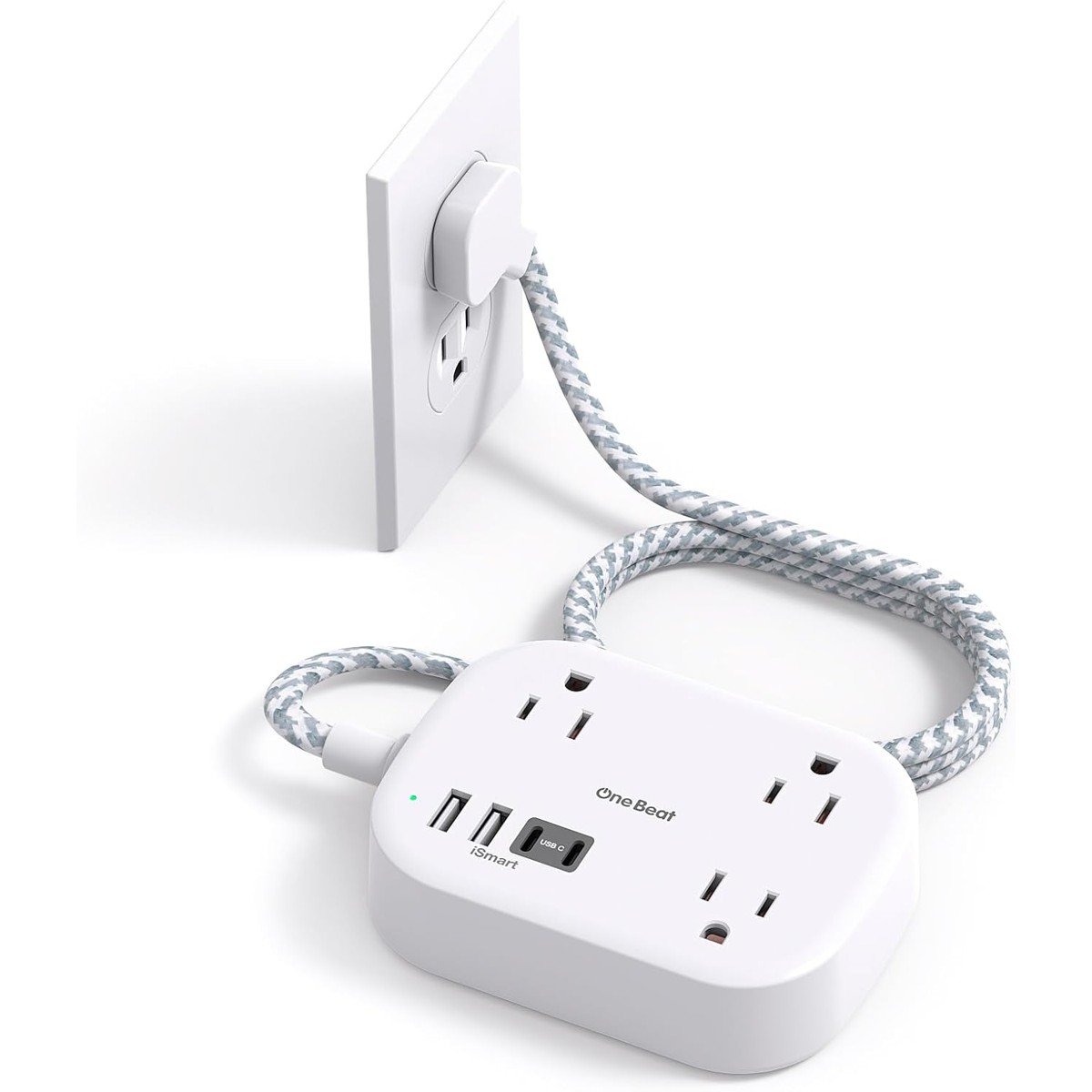
The One Beat OB3WC2 is the travel pick, and it starts with the honest part: it has no surge protection, zero joules. That is deliberate. Cruise lines ban surge protectors on board, so a non surge strip is the one you are allowed to pack. In return you get 3 AC outlets and four USB ports, two USB-A and two USB-C sharing 15.5W, in a unit about 4.1 by 3.2 inches that weighs under 10 ounces. The braided cord is 5 ft per the product manual, and the flat plug sits flush in hotel outlets. It is ETL and FCC certified. On land it works fine as a small bedside strip for chargers, as long as you remember it will do nothing in a surge.
Pros:
Cons:
Who should skip it: anyone shopping for home protection. This is a travel tool. At home, pick any of the rated strips above.
Joules, honestly. The joule rating is the total surge energy the strip can absorb across its life. A strip in a stormy area or one guarding a TV and a game console deserves 2,000 joules or more. Small ratings are fine for chargers and lamps. When the Protected light goes out, the budget is spent and the strip is just an outlet splitter until you replace it.
USB wattage and sharing. A 20W USB-C port fast charges one phone. When the spec says shared or total, that wattage splits between everything plugged in. Count the ports, then read the total, not the headline number for one port.
Cord length and plug shape. Measure from the outlet to where the strip will live. Flat plugs matter behind furniture, and a flat cord lies flatter along a wall. A wall tap with no cord is cleanest of all when the gear already sits at the outlet.
Outlet layout. Bricks block neighbours. Wide spacing and sideways BlockSpace style outlets decide whether a 12 outlet strip really holds 12 plugs.
Certification and warranty. Look for UL, ETL, or TUV listing in the manual, and treat connected equipment warranties as a sign the maker stands behind the protection rating. They pay out under strict conditions, so they are a backup, not a plan.
Daisy chaining strips. Plugging one strip into another overloads the first strip and voids most warranties. Buy the cord length you need instead.
Buying by outlet count alone. Twelve crowded outlets can hold fewer real plugs than eight well spaced ones. Layout beats the headline number.
Assuming USB ports are all fast. Many strips share 15W or less across every USB port. A tablet and a phone together can slow to a crawl. Check the total, not the port count.
Keeping a strip after the Protected light dies. The outlets still work, which is exactly the trap. The protection is gone and the strip will not tell you twice.
Packing a surge strip for a cruise. Ships ban them and confiscate them at boarding. Travel with a non surge strip like the One Beat, and leave the protected strip at home.
Running heaters and hair dryers through a small strip. High draw appliances belong in the wall outlet. Strips here are rated to 1,875W at most, and space heaters sit right at that edge.
How many joules do I actually need? For a TV, console, or desktop PC, 2,000 joules or more is a sensible floor, and the GE and the big Belkin here clear it. For phone chargers, lamps, and a laptop, 1,000 to 1,700 joules is reasonable. For travel on a cruise ship, the answer is zero, because surge protectors are banned on board.
Can a power strip really save my TV? It can absorb the small and medium surges that come through household wiring, which are the common kind. It cannot stop a direct lightning strike, and no honest maker claims otherwise. Unplug during severe storms for the gear you cannot replace.
Why does my strip say the USB wattage is shared? Because one small power supply feeds all the USB ports. The headline rate is what one port can draw alone. Two or three devices split the total between them.
How often should I replace a surge protector? Replace it when the Protected light goes out, after any major surge event you know about, or every few years in areas with frequent storms. The protection parts wear a little with every surge they absorb.
What is the difference between a power strip and a surge protector? A power strip only splits one outlet into many. A surge protector adds components that absorb voltage spikes, rated in joules. The One Beat above is a plain power strip. The other five are surge protectors.
Can I plug a strip into an extension cord? Makers and safety listings say no. Plug the strip into the wall, and choose a model whose cord reaches, like the 10 ft TESSAN or the 8 ft GE. If your charging needs extend beyond the wall, pair the strip with the best portable power bank for travel for the devices that move with you.





[…] home, keep every device topped up from one spot with one of the best power strips with USB that fits your charging […]