Physical Address
304 North Cardinal St.
Dorchester Center, MA 02124
Physical Address
304 North Cardinal St.
Dorchester Center, MA 02124

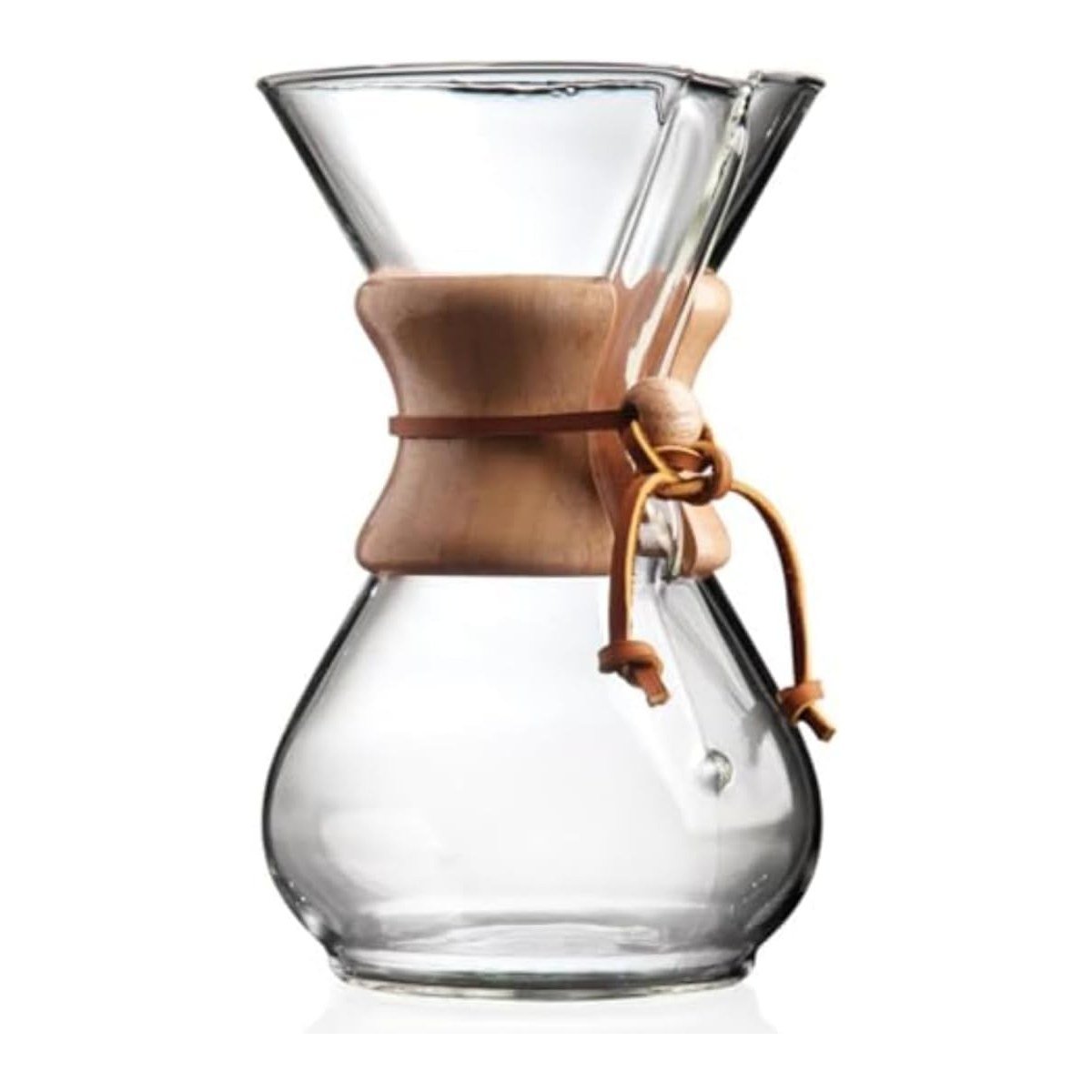
Pour over is the simplest way to take control of your coffee. You choose the grind, you control the pour, and the brewer just gets out of the way. The Chemex Classic 6-Cup is the best all round pick here, because it brews for two or three people at once, doubles as a serving carafe, and its thick bonded filters make the cleanest cup on this list. The Hario V60 is the pick for anyone who wants maximum control over flavour. The Kalita Wave is the forgiving one for mornings when your pour is less than perfect. The Bodum needs no paper filters at all, the OXO does the pouring for you, and the Melitta is the one cup cone that costs less than a bag of beans.
As an Amazon Associate, Wunely earns from qualifying purchases. If you buy through a link on this page, we may earn a small commission at no extra cost to you.
Updated November 2026.
Pour over means manual brewing, so it is not for everyone. If you would rather press a button and walk away, our guide to the best coffee maker covers automatic machines that do the work for you.
For a deeper comparison, see our guide to the best pour over coffee maker picks.
| Pick | Type | Capacity | Filter | Best for |
|---|---|---|---|---|
| Chemex Classic 6-Cup (CM-6A) | Glass carafe brewer | 30 oz, 6 cups at 5 oz each | Chemex bonded paper | Best overall, cleanest cup |
| Hario V60 Ceramic 02 (V60-02W) | Ceramic cone dripper | 1 to 4 cups | V60 02 paper | Most brew control |
| Kalita Wave 185 Stainless (5033) | Flat bottom steel dripper | 16 to 26 oz, 2 to 4 cups | Kalita Wave 185 paper | Most forgiving pour |
| Melitta Single Cup Pour-Over (640007) | Plastic cone, sits on a mug | 1 cup | Melitta #2 cone paper | Cheapest way in |
| Bodum Pour Over 34 oz (11571-109US) | Glass carafe, cork grip | 34 oz, 1 liter | Reusable steel mesh, no paper | Paper free brewing |
| OXO Brew Single Serve Pour-Over (11180100) | Cone with auto drip tank | Up to 12 oz | #2 cone paper, 10 included | Easiest hands off mornings |
Every brewer here had to be a real pour over maker with a stated filter type, a stated capacity, and a maker page or manual we could check. We verified the exact model and its Amazon ASIN against two independent sources, such as the manufacturer manual, camelcamelcamel, or a second retailer, so the button under each pick goes to exactly the brewer described. We also read the manuals for the details listings skip: which filters each brewer takes, how long a brew should run, and what the maker says about grind size. One honest note up front: no pour over brewer makes good coffee from stale beans or a bad grind. The brewer matters less than fresh coffee, the right grind, and water just off the boil. What a good brewer does is make those three things easier to get right.
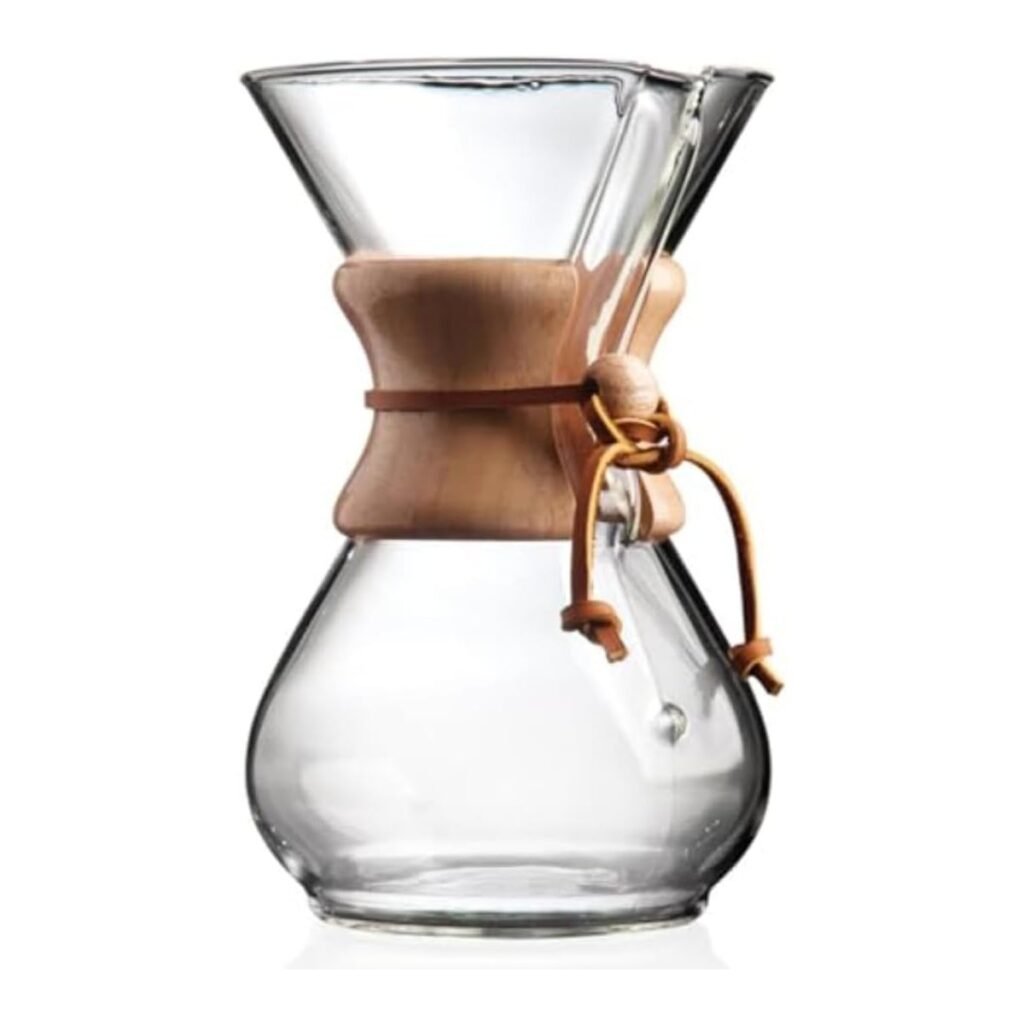
The Chemex Classic 6-Cup is the brewer to buy when pour over has to serve more than one person. It is a single piece of non porous borosilicate glass shaped like an hourglass, with a polished wood collar and a leather tie for a handle. You fold a thick Chemex bonded filter into the top, add medium coarse grounds, and pour. The glass holds 30 ounces, which Chemex counts as 6 cups at 5 ounces each, so it brews enough for two or three mugs in one go. The thick filters are the whole point of this brewer. They trap more oils and fine grounds than standard paper, which is why the cup tastes so clean and sweet, with bright notes standing out. The manual puts the total brew time at around 4 to 5 minutes. The glass carafe is dishwasher safe once you remove the collar, and the design dates back to 1941.
Pros:
Cons:
Who should skip it: anyone who brews one small cup a day. The Melitta or the Hario below will do that job with less waste and less counter space.
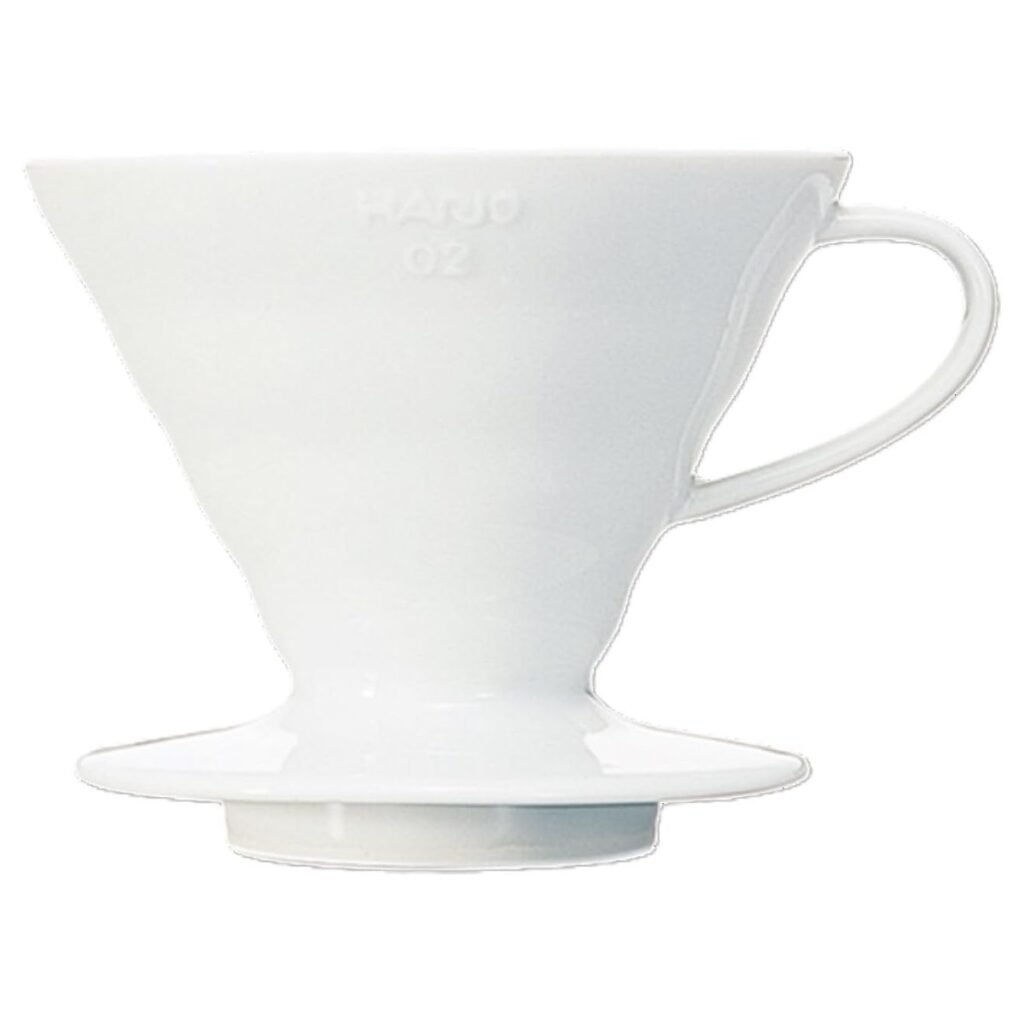
The Hario V60 Ceramic 02 is the brewer for people who enjoy the process. It is a white ceramic cone with a 60 degree angle, spiral ridges inside, and one large hole at the bottom. That single hole is what gives you control. Pour fast and the water runs through quickly for a lighter cup. Pour slow and it lingers for a richer one. The ceramic is made in Japan from Arita-yaki pottery, and it holds heat well once preheated, which keeps the brew temperature steady. Size 02 takes V60 02 paper filters and brews 1 to 4 cups, so it covers a single mug or a small pot. The manual suggests a medium fine grind and a total pour time of 2:30 to 3:30 for a single serving. It is dishwasher safe, and it sits on a mug or a carafe.
Pros:
Cons:
Who should skip it: anyone who wants a forgiving morning brew. The Kalita Wave below forgives a rough pour, and the OXO removes the pour entirely.
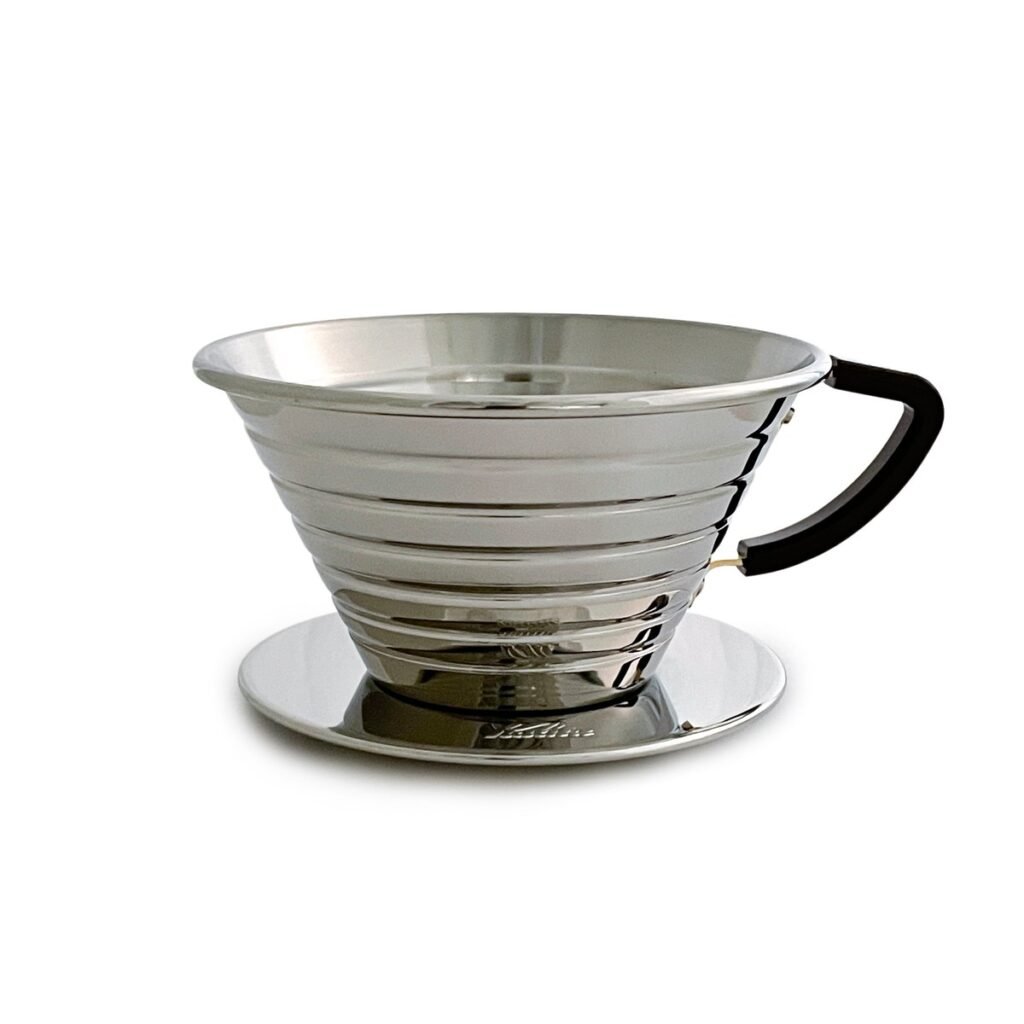
The Kalita Wave 185 is the forgiving one. Where the V60 funnels water through a single point, the Wave has a flat bottom with three small drainage holes, so the water spreads evenly across the coffee bed no matter how neat your pour is. The result is a rounder, sweeter cup with fewer surprises from one morning to the next. The stainless steel body is light, unbreakable, and easy to rinse, and it is made in Japan. Size 185 brews 2 to 4 cups, with a yield of 16 to 26 ounces, and it takes Kalita Wave 185 filters, whose wavy walls keep the paper off the dripper sides. That is the tradeoff to know before you buy: the filters are proprietary, they cost more than standard cone filters, and they can be harder to find in a local shop.
Pros:
Cons:
Who should skip it: anyone who wants the brightest, most delicate cup possible. The Chemex and the V60 above pull more clarity from light roast beans.
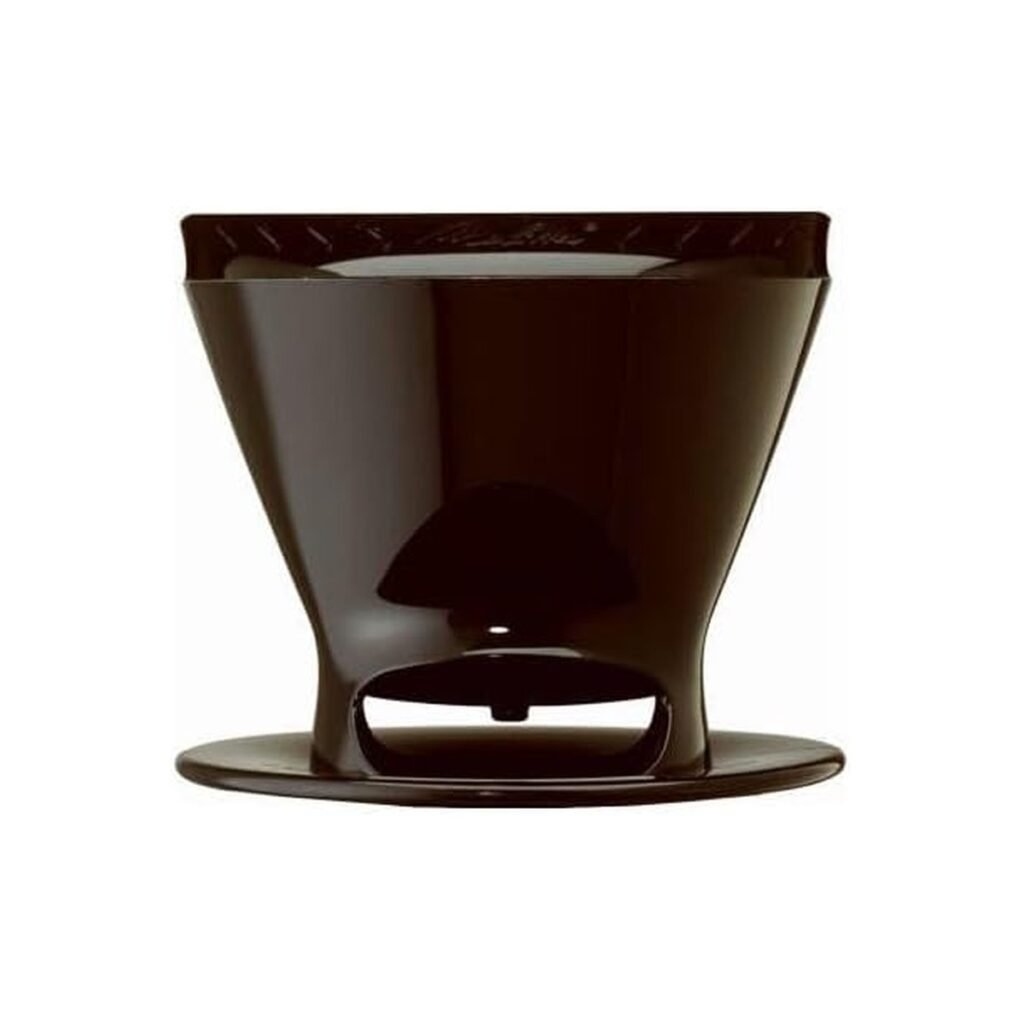
The Melitta Single Cup Pour-Over is the cheapest credible way into pour over, and it has been around longer than almost everything else on this list. It is a simple BPA free plastic cone that sits directly on your mug. You drop in a Melitta #2 cone filter, add medium fine grounds, and pour. The manual puts the brew at 2 to 4 minutes for one cup, using 1 to 2 tablespoons of coffee per 6 ounces of water. There is nothing to assemble, nothing to preheat, and nothing to break. It is top rack dishwasher safe, and it weighs almost nothing, so it travels well too. The cone fits most standard mugs, though very wide or very narrow mugs can wobble, so check the fit on your favourite mug before the first brew.
Pros:
Cons:
Who should skip it: anyone brewing for two or more. The Chemex or the Bodum below make a full pot in one pass.
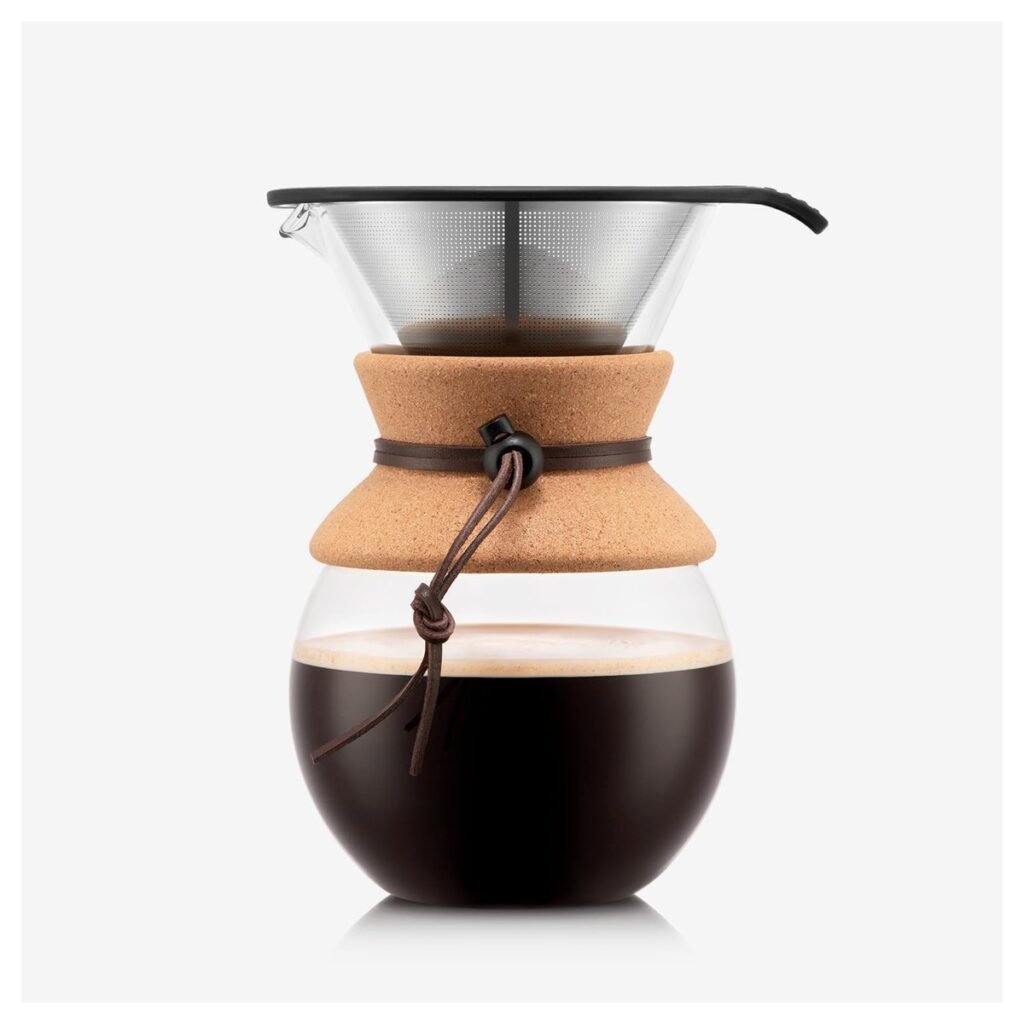
The Bodum Pour Over is the pick for anyone who hates buying paper filters. It is a 34 ounce borosilicate glass carafe with a reusable stainless steel mesh filter built in, so there is nothing to restock and nothing to throw away after each brew. A cork band with a leather tie wraps the middle as a grip, and the carafe holds about a liter, which Bodum counts as 8 cups at 4 ounces each. The steel mesh lets the coffee oils through, so the cup is fuller bodied and richer than a paper filtered brew, closer to a French press in character. The manual recommends a coarse grind, which matters: too fine a grind will slip through the mesh and leave sediment in the cup. The carafe is made in Portugal, and the cork grip should be kept dry rather than soaked.
Pros:
Cons:
Who should skip it: anyone who wants the cleanest possible cup. Paper filters catch the fines and oils that the mesh lets through, so the Chemex is the better pick for clarity.
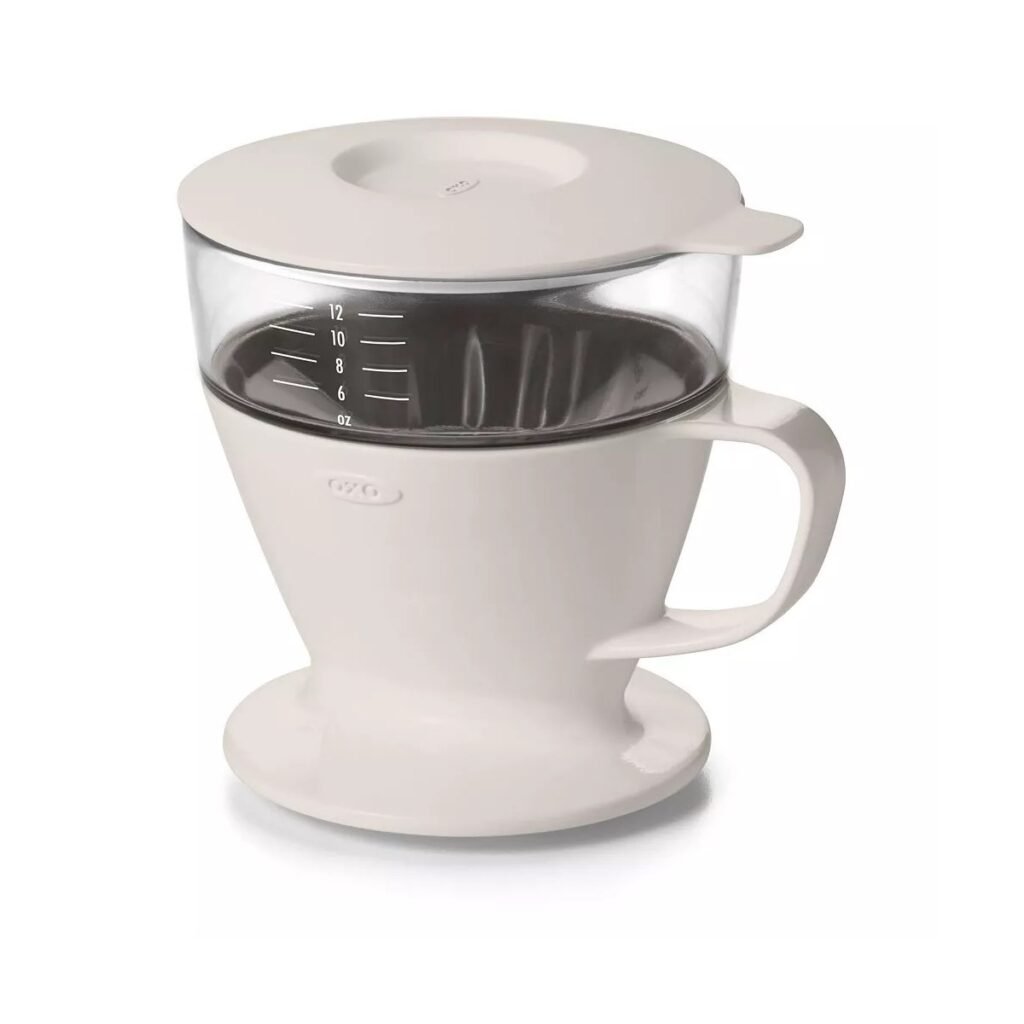
The OXO Brew Single Serve is pour over for people who do not want to learn to pour. You set the cone on your mug, drop in a #2 cone filter and grounds, then fill the water tank on top up to the 12 ounce mark and walk away. Small holes in the tank meter the water over the grounds at a steady rate, so the pour is even without a gooseneck kettle or a practiced hand. The lid holds heat in during brewing and then doubles as a drip tray. It comes with 10 unbleached OXO #2 cone filters, and the whole thing is dishwasher safe. The body is polypropylene and Tritan, and OXO covers it under its Better Guarantee. The honest tradeoff is control. The tank starts draining the moment you fill it, so there is no bloom pause and no way to slow the flow by hand. The cup is solid and consistent, but it will not match what a practiced V60 pour can do with the same beans.
Pros:
Cons:
Who should skip it: anyone who enjoys the ritual of pouring and wants to chase the best possible cup. The Hario V60 above rewards that effort, and this OXO deliberately removes it.
Capacity first. Count the mugs you actually brew each morning, not the ones you might brew one day. A single cup cone is perfect for one person and a chore for two. A 30 ounce Chemex or a 34 ounce Bodum makes a pot in one pass, but both are too big for a single small mug. Remember that brands count cups differently: Chemex counts 5 ounces per cup, Bodum counts 4, so read the ounce figure, not the cup number.
Filter type decides the cup and the running cost. Thick paper filters, like the Chemex bonded ones, make the cleanest cup and cost the most over time. Standard #2 cone filters are cheap and sold everywhere. Wave filters are proprietary and harder to find. A steel mesh filter, like the Bodum, costs nothing after the first purchase but leaves fine sediment and a heavier body in the cup. Pick the filter you are happy to keep buying, or not buying.
Material sets the character. Ceramic holds heat well and suits slow, careful brewing. Glass lets you watch the brew and doubles as a carafe, but it breaks. Stainless steel is light and unbreakable, which suits travel and clumsy mornings, but it cools faster. Plastic is cheap and light, and it will never win a beauty contest.
Brew control is a spectrum, not a ranking. The V60 gives you the most control and punishes the most mistakes. The Kalita Wave forgives a rough pour. The OXO removes the pour entirely. Be honest about how much attention you want to give a mug of coffee at 7 in the morning, and buy the brewer that matches that answer.
Grind and kettle matter more than the brewer. Pour over needs a consistent grind, medium fine for cone drippers and coarse for mesh filters, and water just off the boil. A gooseneck kettle is close to essential for the V60 and the Chemex, optional for the Kalita, and pointless for the OXO. If you do not own a burr grinder yet, that is a better first purchase than a second brewer.
Buying by looks alone. The Chemex is beautiful, and it is also tall, fragile, and tied to one brand of filters. The Melitta is plain plastic, and it makes a perfectly good cup. Choose the brewer that fits your routine, then enjoy how it looks.
Using the wrong grind. Too fine a grind stalls the drip and turns the cup bitter. Too coarse a grind lets the water rush through and leaves the cup weak and sour. Start with the grind the manual suggests for your brewer, medium fine for paper cones and coarse for mesh, and change one thing at a time.
Skipping the rinse. Rinsing a paper filter with hot water before brewing removes the paper taste and preheats the brewer. It takes ten seconds, and skipping it is the easiest way to make a good brewer taste average.
Pouring boiling water straight from the kettle. Water at a full rolling boil scalds the grounds and pulls out bitterness. Let the kettle sit for 30 seconds after it boils, or aim for water just off the boil, around 200 degrees Fahrenheit.
Buying the wrong size filters. V60 02 filters do not fit a size 01 dripper, Wave 185 filters do not fit a 155, and Chemex filters do not fit anything else. Match the filter number to the brewer exactly, and check the box before you order a refill pack.
Expecting pour over to replace a machine. Pour over is manual by design. If you want coffee ready when you wake up, or a pot that stays hot for an hour, an automatic brewer is the honest choice. Our guide to the best coffee maker covers the machines that do the work for you.
What is the best pour over coffee maker for beginners? The Kalita Wave 185 is the easiest manual brewer to get a good cup from, because its flat bottom forgives an uneven pour. If you want to skip the pouring skill entirely, the OXO Brew Single Serve does the pouring for you with its water tank.
Do I need a gooseneck kettle for pour over? For the Hario V60 and the Chemex, yes, or close to it. A slow, controlled pour is what makes those brewers work. For the Kalita Wave it helps but matters less, and for the OXO and the Melitta a regular kettle is fine.
What grind size should I use for pour over? Medium fine for paper cone drippers like the V60, Chemex, Kalita, and Melitta, and coarse for the Bodum mesh filter. If the brew runs too fast and tastes weak, go finer. If it stalls and tastes bitter, go coarser.
Are paper filters or a metal filter better? Paper filters make a cleaner cup with less sediment, and they catch oils that can turn bitter. A metal mesh filter keeps the oils in, so the cup is fuller bodied, but it leaves fine sediment behind. Neither is better in general. It depends whether you prefer a clean cup or a rich one.
How many cups does a pour over maker actually brew? Read the ounces, not the cup count, because brands count cups differently. The Chemex 6-Cup holds 30 ounces at 5 ounces per cup. The Bodum 34 oz holds a liter. The Hario V60 02 and the Kalita Wave 185 brew 1 to 4 cups depending on how much water you pour. The OXO makes one 12 ounce mug, and the Melitta makes one cup at a time.
Can I use pour over coffee makers without a special kettle? Yes for the OXO, the Melitta, and the Kalita Wave, which are forgiving of an ordinary pour. The V60 and the Chemex really do need a gooseneck kettle to pour slowly and evenly. If you buy one of those without one, budget for a kettle too.